 Ledgerlive
Ledgerlive staking connects eligible crypto to network rewards through Ledger Live
Updated -
Ledgerlive staking lets you earn rewards through eligible staking options in Ledger Live, formerly Ledger Live. Your Ledger device signs your staking transactions. The selected network and provider determine reward accrual, fees, and withdrawal rules, including whether earnings compound automatically or require a claim.
Eligible balances, active stake, and earned rewards
An eligible balance can earn staking rewards after you stake it and meet the activation and accounting rules of its selected network or provider. Earn distinguishes available staking opportunities from existing positions. Holding a supported asset without staking it does not establish a delegated or pooled position. Asset support, the selected network, minimum participation requirements, and the provider's terms determine eligibility. A token with a similar symbol on another network does not automatically qualify for the same offer.
A successfully executed, confirmed staking transaction records the commitment, while network or pool status establishes how it earns. Solana distinguishes activating stake from active stake; only active stake qualifies for network rewards. Pool contracts account for participation through the position they issue. An estimated annual return describes a projection. Earned rewards describe accrued amounts, which can still require a claim or remain part of a staked position.
The integrated Earn dashboard's cumulative reward field includes previously claimed rewards. Its total therefore need not equal the amount available to claim now. Account synchronization refreshes the position view, while provider refresh intervals influence when new reward data appears.
Delegation, dedicated validators, and pooled positions
The staking method determines how funds participate in validation and what position the wallet controls. Native delegation assigns stake to a validator on networks that support it. Ethereum supports directly funded validators; third-party pools combine contributions outside its native staking mechanism. Activating an Ethereum validator requires at least 32 ETH; a pool can combine smaller contributions. A service-operated validator assigns infrastructure work to the operator, while the withdrawal arrangement governs access to funds.
These options have different reward records and exit conditions. Coinbase offers an on-chain ETH staking pool through Ledger Live. Kiln's pooled service through Ledger Live excludes US-based users. The recovery entries assume that the original wallet controls the relevant account or withdrawal authority.
| Staking option | Reward accounting | Access after wallet recovery |
|---|---|---|
| Provider-operated ETH validator | Consensus rewards follow withdrawal credentials; transaction tips go to the fee recipient | Withdrawal-authority access; protocol queues still apply |
| Kiln ETH pool | Pool-share value reflects accumulated rewards | Position access; fulfilled exits require a claim |
| Coinbase ETH pool | Pool accounting tracks stake and rewards | Position access; the provider's withdrawal flow still applies |
| Lido liquid staking | stETH balances reflect staking rewards | Token access; redemption still requires request fulfilment |
| Solana delegation | Rewards increase the active stake-account balance | Authority access; withdrawal requires inactive stake and any lockup expiry |
| Cosmos Hub delegation | ATOM rewards accrue separately from bonded stake | Account access; unbonding rules still apply |
| Shared recovery limit | The original wallet configuration restores account keys | Each route retains its withdrawal conditions |
Reward rates and the fees that reduce earnings
Staking returns reflect network rewards and validator performance, with service charges and transaction costs reducing the amount you retain.
Validator commission
A validator or staking provider can retain a share of earned rewards as commission. Read what the percentage applies to: a commission on rewards differs from a charge on the amount deposited. Gross and net rates therefore require matching fee treatment before comparison. A rate that already includes commission should not have the same charge deducted again. The quoted return also changes with the network's reward conditions.
Transaction costs
Blockchain fees pay for deposits, claims, and withdrawals when those operations require on-chain execution. Ethereum gas costs depend on computation and the fee per unit of gas. An available fee-paying balance covers the actions that the selected route requires. Staked funds or a liquid staking token may not provide spendable gas. Claim frequency changes total transaction costs when each claim requires an on-chain transaction.
Device approval and token permissions
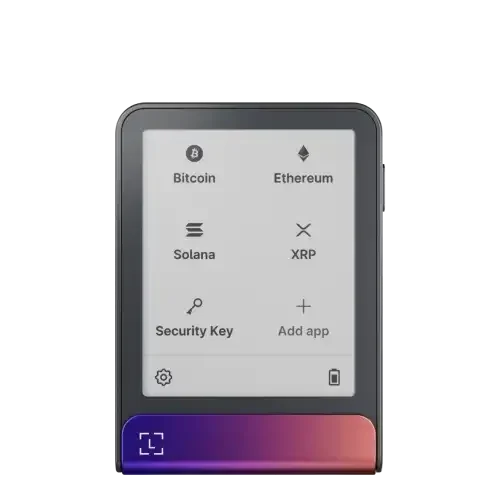
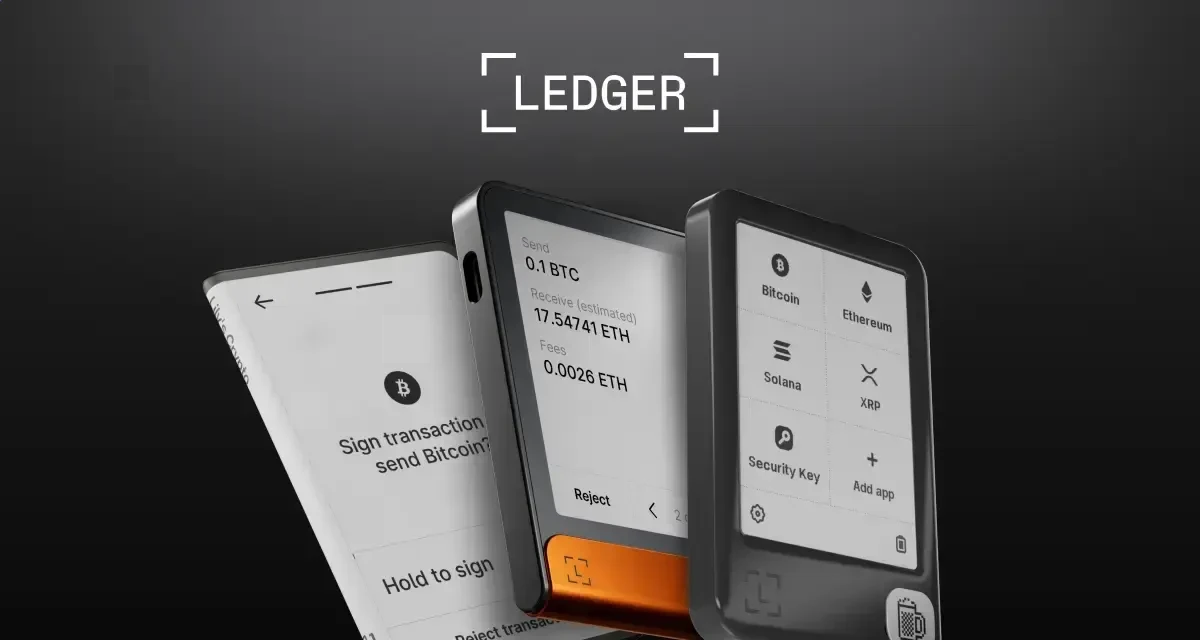
Choose an eligible asset and staking route in Earn, then review the amount, fees, and withdrawal terms. Sign only if the operation and amount shown on your Ledger device match your intended stake. Closing an unsigned request leaves the blockchain unchanged. After submission, successful execution, and confirmation, the network or contract controls how the committed position can exit. The ability to preview terms does not make a confirmed deposit instantly reversible.
Clear Signing makes supported contract interactions readable on the device screen. An ERC-20 allowance grants a contract permission to spend tokens, which differs from a staking deposit or withdrawal request. Some token-based routes need an allowance before the requested operation. Rejecting a later prompt does not undo an allowance that the network has already confirmed. Protecting signing keys cannot prevent every loss caused by an authorized contract interaction.
Liquid staking balances and reward accounting
Liquid staking issues a token representing a staked position, and its accounting method determines where rewards become visible.
Rebasing balances
Lido's stETH is an ERC-20 liquid staking token supported in Ledger Live. Staking rewards adjust the stETH balance through rebasing. This changes the displayed token amount without an ordinary incoming reward transfer. An absent payment entry therefore does not, by itself, show that rewards are missing.
Exchange-rate accounting
Wrapped stETH, or wstETH, represents the underlying Lido position using a different balance model. Its token quantity stays constant unless tokens move or another token operation occurs. Staking rewards instead affect how much stETH each wstETH represents. Comparing those token counts directly misreads the position. Pool-share products can also reflect accrued rewards in a share's underlying value, so the stated unit matters.
A liquid token provides a transferable position. Selling it accepts the available market quote, which can differ from its underlying redemption value.
Does staking require Ledger Live to stay open?
Staking continues on the network after you close Ledger Live or disconnect the Ledger device, provided the position remains eligible. Delegated and pooled routes rely on validators or operators, so your computer does not perform their validation work. A later claim or withdrawal can still need a new signed transaction. Keeping the app open affects your ability to view and manage the position.
Unstaking requests, queues, and spendable funds
Unstaking follows the rules of the selected network and staking service, so submitting a request can precede access to spendable funds.
Native delegation and validator withdrawals
Solana stake can be withdrawn once the selected amount is inactive, subject to any stake-account lockup. Deactivation progresses at epoch boundaries. Cosmos Hub delegations use the network's unbonding rules before funds become available again. Those mechanisms explain why a successful unstaking request can leave the spendable account balance unchanged.
Ethereum validator withdrawals also depend on withdrawal credentials. Legacy validators sweep excess rewards, while compounding validators retain eligible rewards within their effective balance. Full exits and supported partial withdrawals have different conditions. A provider interface may expose only some protocol capabilities, so network-level support does not establish that every route offers the same controls.
Pool fulfilment and claims
Kiln pooled staking requires a claim transaction after the withdrawal request has been fulfilled. Lido also separates withdrawal requests from the eventual ETH claim. Submitting the request locks the specified stETH in Lido's withdrawal queue. That amount earns no further rewards for you while queued and remains exposed to staking losses. Once finalized, the request's owner can claim the reserved ETH.
Pool liquidity, validator exits, and network queues influence fulfilment time. An estimate can change as those conditions change. A confirmed claim and the resulting available balance establish that funds have returned to the account. A receipt, pending status, or estimated date alone does not establish payment.
Validator performance and slashing exposure
Validator performance affects rewards, and some networks can penalize the stake associated with misconduct or missed duties. Commission describes the validator's share of rewards; it does not describe reliability. On Ethereum, downtime can reduce earnings and incur penalties, while provable conflicting signatures can trigger slashing. Network-specific rules determine whether losses pass through to delegators or pool participants.
Smart-contract routes add a separate exposure: a contract fault or compromised control can affect the position even when private keys remain secure. A liquid token also carries market-price risk when sold. These risks arise from different mechanisms, so a lower commission cannot remove every other risk.
Recovery of staking authority after device loss
Wallet recovery restores the keys controlling a staking position when the replacement device uses the original recovery phrase and wallet configuration. Any original passphrase must also match. Restoration does not reverse deposits, clear an unbonding period, or replace an operator's validator infrastructure. The relevant provider interface may still be needed to manage a contract position. Enter the recovery phrase only on the replacement hardware device during recovery, never into an earning application or a purported claim form.
APR, APY, and the difference between staking and lending
APR and APY describe annualized returns with different compounding assumptions, while the mechanism behind an Earn offer determines where those returns originate. Annual percentage rate, or APR, excludes compounding. Annual percentage yield, or APY, includes it under the stated assumptions. Automatic compounding, manual staking of claimed rewards, and claim frequency therefore affect interpretation. A quoted percentage also differs from the change in a position's currency value.
Earn includes lending and other yield products alongside network staking. Lending supplies assets to a credit market; staking supports blockchain validation. Stablecoin yield can therefore involve borrower liquidity and lending-contract conditions, without delegating that stablecoin to a network validator.
Underlying funds awaiting unbonding or fulfilment of a withdrawal request remain unavailable to spend until the process and any required claim finish.
Things people ask about Ledgerlive staking
Can I change an Ethereum validator's withdrawal address in Ledger Live?
An Ethereum validator's assigned execution-layer withdrawal address cannot be changed by editing the wallet application. That address forms part of the validator's withdrawal credentials. A staking provider may route payouts through a contract, so the contract's recipient controls are a separate issue. Wallet recovery restores the existing account keys.
Does delegating SOL to several validators require separate stake accounts?
Each Solana stake account can delegate to only one validator at a time. Delegations to several validators therefore require several stake accounts, which can share the same stake and withdrawal authorities. Separate stake-account addresses do not automatically mean separate recovery phrases. Control follows the configured authorities, so the corresponding signing keys remain relevant to recovery.
Can I switch Cosmos Hub validators without first withdrawing my ATOM?
Cosmos Hub supports redelegation between validators without first returning the stake to an available balance. Redelegation remains subject to network restrictions, including rules affecting repeated moves while earlier redelegations are still pending. The action changes the validator assignment; it does not make the delegated ATOM freely spendable.
Why does a Lido staking withdrawal create an NFT?
Lido issues an NFT representing the withdrawal request and its right to claim ETH once the request is fulfilled. That receipt can exist before the request becomes claimable. Its presence does not establish that ETH is already available in the account; the request must become claimable before redemption.
Are Ethereum staking transaction fees refunded after an execution failure?
An Ethereum transaction included in a block still pays for gas that execution consumed when the contract reverts. The revert rolls back contract state changes, while unused gas is not charged. A transaction rejected before inclusion is a different case. A failed included deposit can leave the staking balance unchanged while reducing spendable ETH.
Who can inspect a public on-chain staking position?
Anyone with the relevant public account address can inspect staking records that the network makes public. Solana stake-account records expose delegation state and configured authorities. Viewing those records requires no recovery phrase. Sharing an address to discuss a staking problem can also reveal that address's other public activity.
Will I keep earning stETH rewards after transferring the tokens?
For an ordinary wallet-to-wallet transfer, subsequent stETH rewards accrue to the receiving address. If the receiving wallet belongs to someone else, you stop receiving rewards on that portion. Transfers between your own wallet addresses keep reward exposure under your control. The transferred balance includes rewards already reflected by earlier rebases.